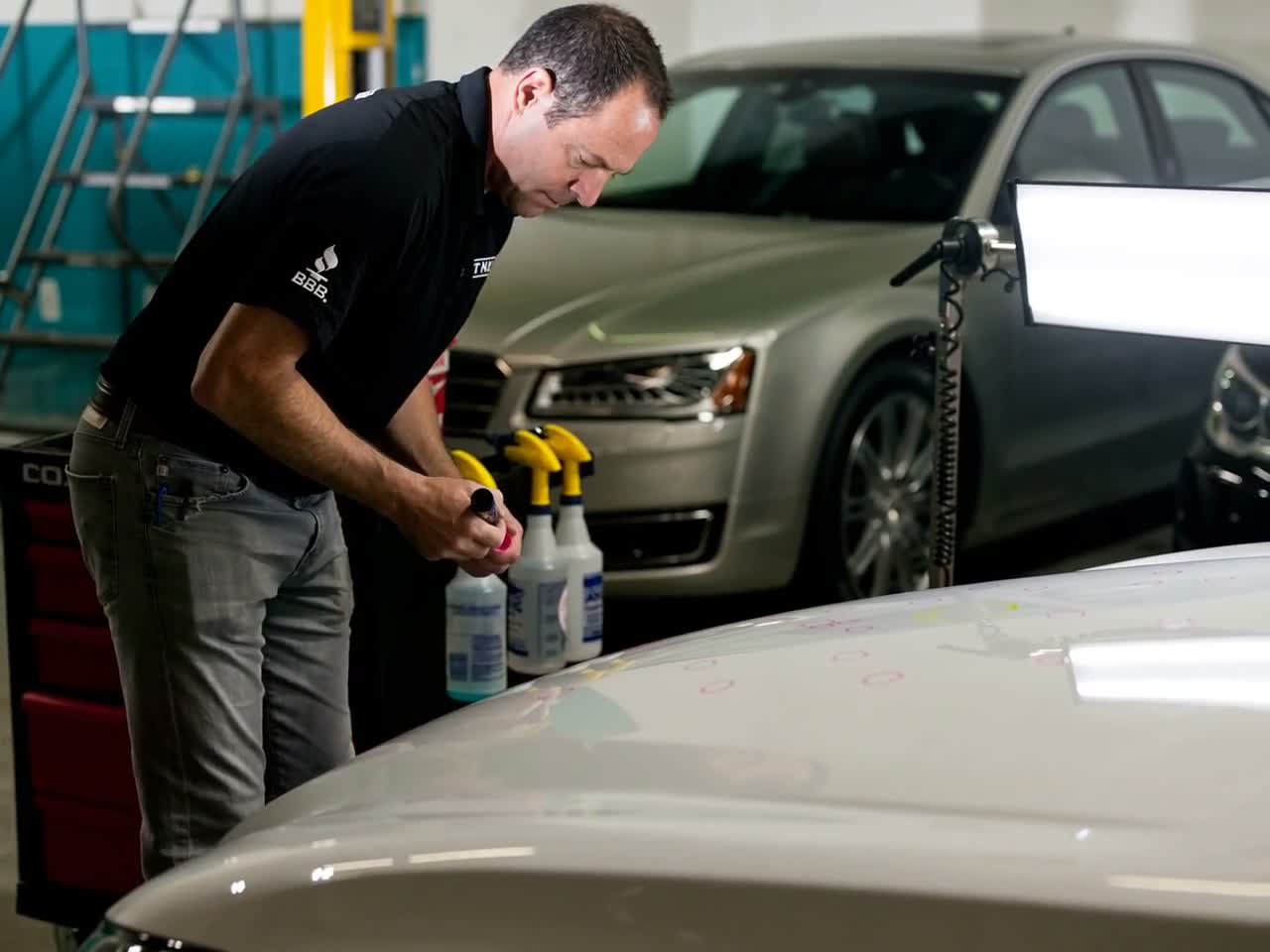
Keeping a vehicle’s existing finish is a worthwhile goal. The way to reach it starts with the actual panel, its paint and the damage—not a blanket promise that one repair method fits every car.
What paintless dent repair aims to preserve
Paintless dent repair uses controlled pushing or pulling techniques to reshape a dent while preserving the finish. When the damage and vehicle permit it, this can avoid the need to refinish that area. The inspection determines whether it is an appropriate option.
Aluminum needs a vehicle-specific plan
Steel and aluminum are not interchangeable repair surfaces. I-CAR’s discussion of Rivian’s PDR position statement illustrates why the vehicle-specific instructions matter: that manufacturer permits PDR on both materials with limitations, and requires evaluation of paint micro-cracking. Those instructions are an example for Rivian vehicles, not a universal rule for every brand.
Access matters as much as appearance
A dent that looks simple from above may be difficult to reach from behind. Bracing, adhesives, foam and nearby components can affect the repair approach. I-CAR cautions against drilling access holes to perform PDR and against damaging other parts during dent removal.
Ask for an explanation you can follow
- Which panels are suitable for paintless repair?
- What did the inspection reveal about paint condition and access?
- Which vehicle repair procedures apply to the proposed work?
- Does any part of the plan require refinishing, replacement or further inspection?
A good discussion makes the scope understandable. Ask the shop to explain the alternatives for your vehicle rather than promising that every dent can be removed in the same way. Keep the approved estimate and final repair documentation together.
Haydent LLC’s workmanship warranty describes how we stand behind the repairs we perform. The Warranty button in the header opens the full terms, including how an issue is reviewed and how third-party repairs are approved.